

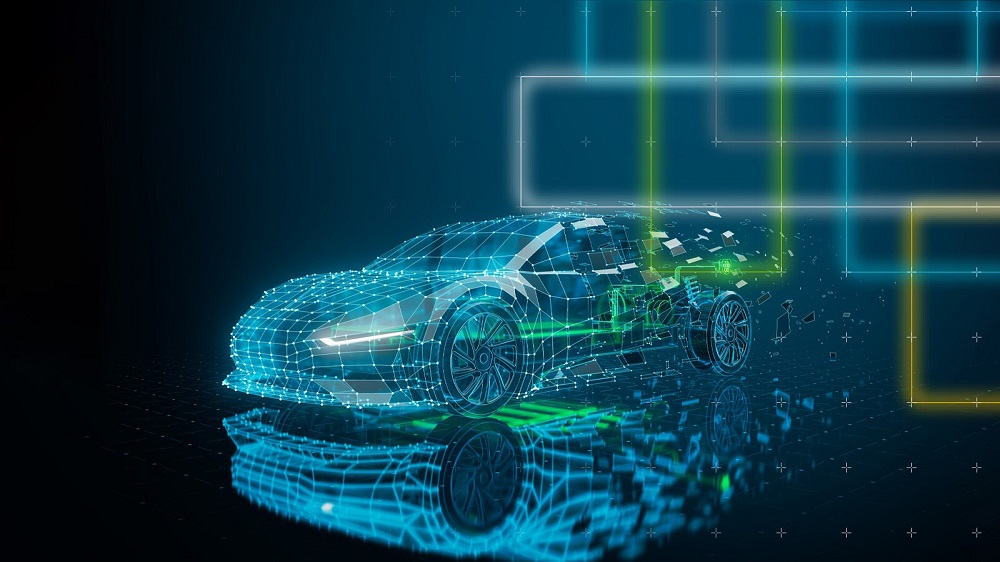
For over a century, automotive performance was defined almost exclusively by mechanical engineering. A car’s speed, handling, and efficiency depended heavily on the displacement of its engine, the gear ratios of its transmission, and the physical stiffness of its springs. Today, however, the automotive landscape has fundamentally changed. While hardware remains the physical foundation of a vehicle, software has become the primary mechanism for controlling, optimizing, and defining vehicle performance.
Modern automobiles are essentially complex networks of computers on wheels. This shift toward software-centric architecture has allowed automotive manufacturers to push the boundaries of efficiency, safety, and driving dynamics to levels that were once mechanically impossible. By using thousands of lines of code to manage physical systems, software has rewritten the rules of how vehicles are engineered, driven, and maintained throughout their operational lifespans.
The Shift to Software-Defined Vehicles
The automotive industry is currently undergoing a massive structural transition toward software-defined vehicles. Historically, vehicles relied on a decentralized computing model featuring dozens of isolated Electronic Control Units. Each individual component, from the power windows to the anti-lock braking system, had its own dedicated microchip running basic, unchanging code.
In a software-defined vehicle, this fragmented architecture is consolidated into a highly centralized computing platform. Powerful multi-core domain controllers or zonal gateways manage multiple vehicular functions simultaneously. This centralized approach enables different systems to communicate with one another in real time, sharing data and coordinating actions to optimize overall performance. Consequently, the value, capability, and personality of a modern vehicle are determined far more by its underlying software stack than by its physical assembly.
Powertrain Optimization and Efficiency
One of the most critical areas where software governs vehicle performance is within the powertrain. In internal combustion engine vehicles, the Engine Control Unit continuously monitors an array of sensors measuring variables such as air intake temperature, engine speed, throttle position, and exhaust composition. Algorithms process this data millions of times per second to make microscopic adjustments to fuel injection timing, spark plug ignition, and turbocharger boost pressure. This precise algorithmic control ensures the engine operates at peak thermal efficiency while minimizing tailpipe emissions.
The reliance on software becomes even more pronounced in electric vehicles. In an electric vehicle, performance is dictated almost entirely by the interaction between the battery pack, the power inverter, and the electric motors, all of which are managed by sophisticated software algorithms:
-
Battery Management Systems: Software monitors the voltage, current, and temperature of individual battery cells. It dynamically balances the state of charge to prevent degradation, optimizes thermal management systems, and ensures safe energy deployment during hard acceleration.
-
Inverter Control Optimization: The inverter acts as the brain of an electric powertrain, converting direct current from the battery into alternating current for the motor. Software determines the switching frequency of the inverter’s transistors, directly dictating throttle responsiveness, torque delivery, and overall energy efficiency.
-
Regenerative Braking Coordination: Software blends mechanical friction braking with electric motor resistance. When a driver lifts off the accelerator, the software commands the motor to operate in reverse, capturing kinetic energy to recharge the battery while smoothly slowing the vehicle down.
Advanced Driver Assistance Systems and Safety
Vehicle performance is not merely measured by speed or acceleration; active safety and situational responsiveness are equally crucial metrics. Advanced Driver Assistance Systems rely heavily on software to interpret spatial data and execute split-second defensive driving maneuvers.
These systems utilize a process known as sensor fusion. A modern vehicle collects massive streams of raw environmental data from an array of external hardware, including cameras, radar units, ultrasonic sensors, and sometimes lidar. On its own, this raw data is meaningless. Sophisticated computer vision algorithms and machine learning models must process these data streams simultaneously to reconstruct a highly accurate, real-time three-dimensional map of the vehicle’s surroundings.
Once the software perceives the environment, it can predict the trajectories of surrounding objects, such as pedestrians, cyclists, and other vehicles. If the system detects an impending collision, the software can bypass human driver inputs to autonomously apply emergency braking, adjust electronic power steering to avoid an obstacle, or tighten seatbelts to mitigate impact forces.
Dynamic Ride Control and Suspension Tuning
The ride comfort and handling characteristics of modern vehicles are no longer locked into static physical configurations. Adaptive suspension systems use software to alter a vehicle’s driving dynamics on the fly, allowing a single car to seamlessly transition from a comfortable luxury cruiser to a stiff, track-focused sports car.
Electronic dampers contain specialized valves or magnetorheological fluid that can change viscosity when an electrical current is applied. Software monitors vertical wheel acceleration, body roll, vehicle speed, and steering inputs to calculate the optimal damping force for each individual wheel. If the software detects a sudden sharp turn, it instantaneously stiffens the outside dampers to counteract body roll, keeping the chassis flat and maximizing tire grip.
Similarly, software manages electronic torque vectoring systems. By applying subtle braking forces to the inside wheels during a turn or directing more electric motor torque to the outside wheels, the software actively helps rotate the vehicle through corners, reducing understeer and significantly increasing cornering performance.
Infotainment and the In-Cabin User Experience
The modern dashboard has evolved from a collection of mechanical gauges into an interactive digital cockpit. Infotainment platforms serve as the human-machine interface, translating complex vehicular data into intuitive visual displays for the driver.
Software handles everything from natural language voice recognition to real-time navigation mapping and smartphone integration. Digital instrument clusters use advanced graphics processing units to render vital performance data dynamically, changing layouts depending on the selected drive mode. Additionally, because these systems are connected to the internet, they can adapt over time, learning user preferences, suggesting routes based on historical driving habits, and delivering localized, contextual alerts.
Cybersecurity and Functional Safety Standards
As software assumes control over critical mechanical operations like steering, braking, and propulsion, ensuring the functional safety and cybersecurity of the underlying code becomes paramount. Automotive engineers must adhere to rigid international software standards, such as ISO 26262, which defines acceptable levels of risk for electronic and electrical systems.
Automotive software development requires strict isolation between different networks inside the vehicle. For example, the infotainment system, which connects to public cellular networks, must be isolated behind secure firewalls from the safety-critical networks that manage steering and braking. If a vulnerability is discovered within the code, manufacturers utilize secure over-the-air deployment frameworks to patch the software remotely, ensuring that vehicle performance and occupant safety are never compromised by external digital threats.
Frequently Asked Questions
Can software updates permanently damage a vehicle’s physical engine or battery?
Automotive software updates go through extensive validation phases before deployment to ensure they operate within safe mechanical thresholds. Built-in failsafes prevent the software from demanding power or thermal loads that exceed the physical capabilities of the hardware. In the rare event that an update file becomes corrupted during installation, vehicles are equipped with redundant memory partitions containing the previous stable software version, allowing the system to roll back automatically without causing hardware damage.
How does software compensate for mechanical wear and tear as a car ages?
As physical components like clutches, valves, and brake pads wear down over time, their tolerances change. Automotive software utilizes adaptive learning algorithms to monitor these changes through sensor feedback. The software continuously recalibrates its command parameters, such as adjusting hydraulic pressures or changing actuator timings, to offset physical degradation and maintain consistent vehicle performance over hundreds of thousands of miles.
Does a software bug have the ability to disable a vehicle’s mechanical brakes?
No, critical safety systems are engineered with hardwired physical backups. Even though software manages advanced braking features like electronic brake distribution, anti-lock braking, and automated emergency braking, the physical connection between the brake pedal and the hydraulic master cylinder remains intact. If a total software failure occurs, the driver can still stop the vehicle by manually depressing the brake pedal, though it will require greater physical effort.
Why do some electric vehicles require software updates to maintain their driving range in winter?
Cold temperatures alter the internal chemistry of lithium-ion batteries, reducing their efficiency and ability to accept a charge. Manufacturers frequently release software optimizations that refine thermal management strategies. These updates adjust how the vehicle pre-heats the battery pack using cabin or motor heat, optimizing energy expenditure to preserve maximum driving range during extreme winter weather conditions.
Can automotive software distinguish between a deliberate performance maneuver and a loss of control?
Yes, stability control software continuously evaluates the relationship between the steering wheel angle and the actual directional movement of the vehicle via yaw rate and lateral acceleration sensors. If the driver turns the steering wheel sharply while the vehicle continues traveling straight, the software recognizes this discrepancy as understeer or a loss of traction. It will then instantly intervene by modulating engine power and applying individual brakes to bring the car back onto the driver’s intended path.
How do software-defined vehicles handle data processing delays during high-speed driving?
Automotive architectures utilize real-time operating systems designed to prioritize safety-critical tasks over non-essential processes. Communication protocols, such as Controller Area Network flexible data-rate and Automotive Ethernet, ensure that messages regarding steering, braking, and collision avoidance are transmitted with microsecond latency. Non-critical data, like audio streaming or climate adjustments, is temporarily deprioritized by the central processor during intense driving scenarios to guarantee instantaneous safety responses.
Is it possible for vehicle owners to customize the underlying performance software themselves?
While some enthusiasts use third-party tuning tools to modify engine maps or throttle response curves, original equipment manufacturers lock down critical software architectures using advanced cryptographic encryption. Modifying factory software typically voids the vehicle’s warranty and can disable over-the-air update capabilities. Unauthorized modifications also run the risk of breaking functional safety loops, potentially rendering advanced driver assistance systems inoperable.