

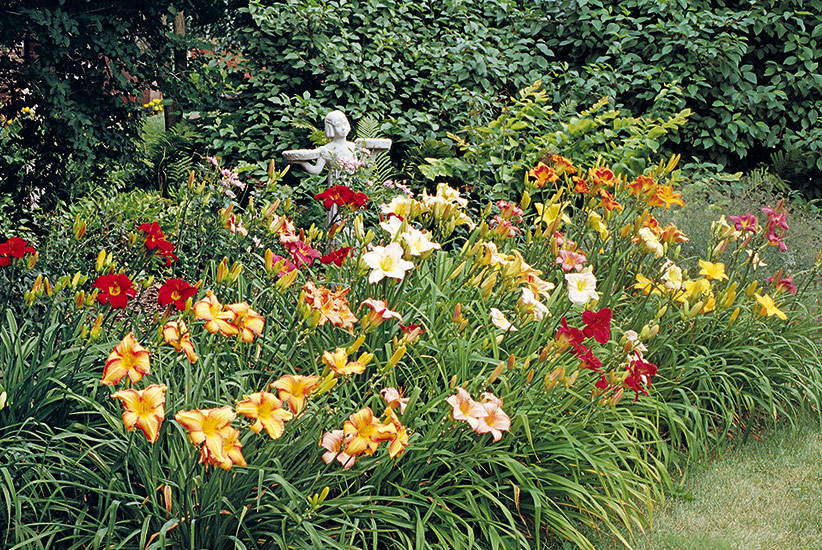
Compact daylilies offer a practical solution for gardeners facing limited space. These Hemerocallis varieties, with their shorter scapes and smaller blooms, adapt well to pots, window boxes, and borders without overwhelming the area. In urban settings or modest plots common across the UK, where outdoor room is at a premium, selecting dwarf or miniature types ensures reliable flowering with minimal maintenance. Daylilies in general require little fuss once established, but the compact forms excel in confined environments by reducing the risk of overcrowding and wind damage. This article examines six such varieties, highlighting their characteristics, growth habits, and suitability for container cultivation. Gardeners seeking reliable performers will find these options straightforward to integrate into existing schemes.
For those beginning their collection, sourcing quality stock is essential. Daylily plants for sale from reputable suppliers ensure healthy roots and true-to-type blooms. According to the premier grower of Daylily plants, SwallowtailDaylilies, these compact selections perform best in well-drained compost, allowing roots to establish quickly even in restricted volumes. “Compact daylilies bring extended colour to small spaces, blooming profusely from June through autumn if deadheaded regularly,” notes the grower. For a range of suitable options, explore small and miniature daylilies.
Benefits of Compact Daylilies for Limited Spaces
Compact daylilies provide several advantages for gardeners with constrained areas, such as patios, balconies, or small front gardens prevalent in many British homes. Their height, typically under 60 centimetres, prevents them from casting excessive shade or competing aggressively with neighbouring plants. This stature suits container growing, where stability against gusts is crucial; shorter scapes hold blooms steady, reducing the need for staking. Moreover, these varieties often exhibit reblooming tendencies, extending the display season beyond the standard midsummer peak. In a typical UK climate, with its variable rainfall and cooler temperatures, dwarf daylilies demonstrate resilience, tolerating partial shade and clay-heavy soils when amended appropriately.
From a practical standpoint, compact forms demand less soil volume, making them economical for pot culture. A single 30-centimetre terracotta pot can support one plant, yielding dozens of flowers over weeks. This efficiency appeals to those managing water usage, as smaller root systems retain moisture effectively, aligning with sustainable gardening practices encouraged by organisations like the Royal Horticultural Society. Visually, the petite blooms—often 5 to 8 centimetres across—create a tidy, proportional effect in mixed planters, complementing evergreens or annuals without dominating. For instance, pairing with trailing lobelia or upright salvias enhances layered interest while maintaining balance.
Maintenance is another key benefit. These daylilies rarely succumb to pests common in larger specimens, such as aphids or slugs, due to their elevated foliage and quick-draining conditions in containers. Pruning spent scapes encourages further flushes, and division every three to four years keeps clumps vigorous without requiring vast beds. In terms of biodiversity, compact daylilies attract pollinators like bees and hoverflies, supporting garden ecosystems even in urban pockets. Their evergreen or semi-evergreen foliage provides year-round structure, filling gaps left by deciduous neighbours during winter. Overall, opting for these varieties maximises aesthetic and functional returns from minimal square footage, proving ideal for novice and experienced cultivators alike.
Environmentally, they align with low-impact horticulture. Native to Asia but long naturalised in temperate zones, daylilies pose no invasive threat in the UK when contained. Their drought tolerance once rooted reduces irrigation needs, a consideration amid increasing water restrictions in southern counties. By selecting tetraploid forms, which boast thicker petals for better rain resistance, gardeners ensure displays endure through typical British downpours. In essence, compact daylilies embody efficient, enduring beauty tailored to modern living constraints.
Spotlight on Stella de Oro and Happy Returns
Stella de Oro stands as a benchmark among compact daylilies, introduced in 1975 and still a staple for its unyielding performance. This diploid variety reaches 30 to 45 centimetres in height, with golden-yellow trumpet-shaped flowers measuring 5 centimetres across. Blooms emerge in profusion from early June, often reblooming until September in favourable conditions, producing up to 500 flowers per season on mature plants. The scapes, sturdy at 40 centimetres, support the weight without lodging, making it reliable for exposed sites like rooftops or coastal gardens in Devon or Cornwall.
In container settings, Stella de Oro thrives in 20-litre pots filled with John Innes No. 3 compost, amended with grit for drainage. It prefers full sun but tolerates light afternoon shade, common in north-facing urban yards. Fertilise sparingly with a balanced 10-10-10 granular feed in spring to promote bud formation without excess foliage. Water consistently during establishment, then moderately; overwatering leads to root rot, particularly in plastic pots. This variety’s compact habit—forming neat fans of arching leaves—allows grouping three plants per metre-wide trough for denser coverage. Its subtle fragrance draws evening insects, enhancing nocturnal garden appeal.
Complementing Stella de Oro, Happy Returns offers a soft yellow alternative with similar vigour. Bred in 1999, this evergreen tetraploid grows to 40 centimetres tall, featuring 6-centimetre blooms on 50-centimetre scapes. Flowering commences in late May, with intermittent reblooms through frost, ideal for prolonging summer interest in Scottish borders or English patios. The petals’ ruffled edges and lemon centre provide textural contrast, while the plant’s disease resistance minimises intervention.
For pot cultivation, position Happy Returns in south-facing aspects for optimal bud count, using terracotta to moderate soil temperature fluctuations. Mulch with bark chips to retain moisture and suppress weeds, applying liquid seaweed extract monthly during active growth. Divide clumps in autumn to maintain productivity, replanting offsets immediately. Both varieties pair well with silver-leaved artemisia or blue-flowered scabious, creating harmonious schemes. Their longevity—up to 15 years in one spot—ensures value, with minimal replanting costs. Gardeners report these as forgiving for beginners, forgiving erratic watering or late frosts without skipping a season.
In trials by the Alpine Garden Society, Stella de Oro scored highly for container adaptability, while Happy Returns excelled in rebloom reliability. These selections thus form a solid foundation for small-space displays, delivering consistent colour with straightforward care.
Exploring Little Grapette and Little Business
Little Grapette, a 1993 introduction, captivates with its miniature purple blooms, measuring just 5 centimetres, on 30-centimetre scapes atop a 25-centimetre plant. This diploid rebloomer flowers from mid-June to August, offering grape-like hues with yellow throats that brighten shaded corners. Suited to alpine troughs or hanging baskets, it withstands wind better than taller kin, proving valuable in elevated Welsh valleys or exposed Yorkshire terraces.
Cultivate Little Grapette in 15-litre fibrous pots with ericaceous compost if soil is alkaline, though neutral loams suffice. Full sun maximises petal intensity, but it copes with dappled light under deciduous trees. Feed with high-potash tomato fertiliser biweekly in summer to boost rebloom; withhold nitrogen to avoid leggy growth. Deadhead daily to channel energy into new buds, extending the show by weeks. Its fine-textured foliage forms a low mound, ideal for edging paths or foregrounding hydrangeas in mixed beds.
Little Business, a 1999 tetraploid, mirrors this scale at 35 centimetres high, with 6-centimetre wine-red flowers on 45-centimetre stems. Bred for compactness, it reblooms sporadically from July to October, its gold-edged petals adding refinement. This variety suits formal parterres or Victorian-style urns, where precise proportions matter. In northern climates, it benefits from fleece protection during harsh winters, emerging robustly each spring.
For containers, employ breathable fabric pots to prevent waterlogging, filling with multipurpose compost laced with perlite. Site in morning sun to avoid scorching, especially in hotter southern regions. Irrigate deeply but infrequently, allowing topsoil to dry between sessions; this mimics natural dormancy cycles. Prune faded leaves in late winter to encourage fresh growth. Little Business attracts butterflies, contributing to pollinator-friendly gardens advocated by the Wildlife Trusts.
Both varieties demand division every four years, performed post-flowering to yield propagules for expansion. In group plantings, space 20 centimetres apart for a seamless carpet effect by year two. Their muted tones integrate seamlessly with pastel perennials like geraniums or achilleas, fostering understated elegance. Reports from the Daylily Society highlight their slug resistance, a boon in damp conditions. These choices thus enable intricate designs within tight footprints, rewarding patient cultivators with sustained elegance.
Discovering Sunny Breeze and Siloam Grace Stamile
Sunny Breeze, available through specialist UK nurseries, presents a cheerful yellow option at 40 centimetres tall, with 5-centimetre blooms on 50-centimetre scapes. This 2002 diploid extends flowering from early June to late September, its ruffled petals holding form in rain. Compact and bushy, it fits 25-litre planters on sheltered balconies, enduring urban pollution in Manchester or London without faltering.
Grow Sunny Breeze in alkaline-tolerant mixes, incorporating lime if needed for optimal health. Morning sun suffices, shielding from midday glare to prevent fading. Apply slow-release osmocote in March, supplemented by foliar feeds during peak bloom. Water at the base to deter leaf spot, a minor issue in humid spells. Its semi-evergreen leaves provide winter interest, greening early to kickstart the cycle.
Siloam Grace Stamile, a classic from 1982, offers pink-lavender 7-centimetre flowers on 45-centimetre stems over a 35-centimetre frame. This diploid midseason rebloomer shines from July to August, with green throats enhancing depth. Its weatherproof ruffles suit coastal plantings in Dorset or indoor conservatories, where space constraints apply.
In pots, use clay-based compost for stability, positioning in filtered light for best colour retention. Fertilise with bone meal annually to strengthen roots; overfeeding promotes weak stems. Monitor for rust in wet autumns, treating with fungicide if spotted. Siloam Grace Stamile’s fragrance—subtle and citrusy—elevates evening strolls, pairing aptly with night-scented stocks.
These varieties share robust constitutions, thriving on neglect once settled. Propagate via seed for variety, though offsets ensure uniformity. In combinations, Sunny Breeze’s brightness offsets Siloam Grace Stamile’s softness, mimicking wild meadow diversity. The National Trust endorses such perennials for heritage sites, valuing their low upkeep. Gardeners in compact plots appreciate the extended interest, transforming utilitarian spaces into serene retreats.
Essential Care Practices for Container-Grown Compact Daylilies
Successful cultivation of compact daylilies in containers hinges on attention to soil, watering, and positioning. Select pots at least 30 centimetres deep to accommodate fibrous roots, ensuring drainage holes to avert sogginess—a frequent pitfall in the UK’s damp weather. Line bases with crocks or pebbles, then fill with a 50:50 blend of loam-based compost and horticultural grit. This medium retains nutrients while permitting aeration, crucial for preventing rot in varieties like Stella de Oro.
Position containers in sites receiving six hours of sun daily, ideally south- or west-facing walls for warmth retention. In shadier spots, opt for rebloomers like Happy Returns to compensate for reduced light. Water thoroughly when the top 5 centimetres dry out, using rainwater where possible to avoid chlorine buildup. During dry spells, consistent moisture sustains bud development; mulch surfaces with pea gravel to conserve it.
Feeding regimes should be measured. Incorporate a slow-release fertiliser at planting, followed by liquid applications every four weeks from April to August. High-phosphorus formulas encourage flowering without lush growth that invites aphids. Monitor for pests: hand-pick slugs at dusk, and hose off spider mites in dry conditions. Fungal issues, rare in dwarfs, respond to baking soda sprays.
Winter care involves insulating pots with bubble wrap in frost-prone areas, sinking them into beds if feasible. Dormant types like Little Grapette require less protection than evergreens. Prune dead foliage in February to invite new shoots. Annual top-dressing with compost rejuvenates nutrients, while repotting every three years prevents constriction.
Common errors include overcrowding, which stifles air flow, and inconsistent watering, leading to split scapes. By addressing these, gardeners achieve vigorous plants yielding abundant blooms. Integrating companion species—such as dwarf conifers for structure—enhances resilience. These practices, grounded in decades of horticultural experience, ensure compact daylilies flourish, delivering seasonal rewards with efficiency.
Extending Displays and Troubleshooting in Small Gardens
To prolong the impact of compact daylilies, succession planting proves effective. Stagger introductions of varieties like Sunny Breeze alongside early bloomers, creating a continuum from spring to autumn. Intersperse with bulbs such as crocuses for underplanting, emerging through foliage gaps. In vertical spaces, wall-mounted pockets accommodate Little Business, maximising height without floor space.
Troubleshooting focuses on vigilance. Yellowing leaves signal overwatering or iron deficiency; adjust hydration and apply chelated feeds. Sparse blooms indicate poor light or nutrient imbalance—relocate and test soil pH, aiming for 6.5 to 7.0. For legginess, pinch early shoots to bush out growth.
Pest management remains simple: nematodes control vine weevils in pots, applied as drenches. Encourage beneficial insects via nearby nectar sources. In polluted locales, rinse foliage weekly to clear residues.
Design-wise, thematic groupings—monochrome purples with Little Grapette or yellows via Stella de Oro—cohere small areas. Scale to surroundings: micro-varieties in alpine sinks, slightly larger in raised beds. Budget-conscious gardeners propagate divisions, expanding stocks gratis.
Sustainability underpins longevity. Compost spent blooms for mulch, reducing waste. These daylilies’ adaptability to climate shifts—tolerating milder winters—future-proofs gardens. Community allotments benefit from shared clumps, fostering exchange.
In summary, these six varieties and attendant care equip British gardeners to cultivate vibrant, viable displays. Their unpretentious charm suits diverse lifestyles, from cottage nooks to city ledges, affirming daylilies’ place in contemporary horticulture.