

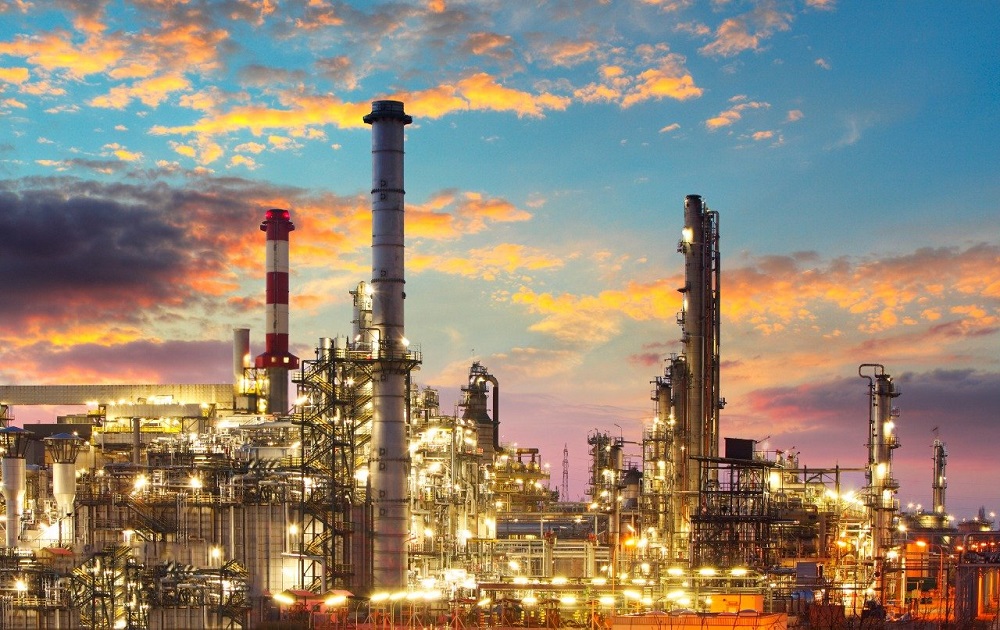
National productivity serves as the ultimate determinant of long-term economic expansion, wage growth, and global competitiveness. While innovations in software and digital services frequently capture public attention, these virtual advancements cannot scale without a highly resilient, physical foundation. Industrial infrastructure—encompassing advanced logistics networks, modernized energy grids, next-generation telecommunications, and automated manufacturing hubs—functions as the foundational framework of a modern economy.
When a nation invests heavily in its industrial infrastructure, it systematically lowers transaction costs, removes supply chain bottlenecks, and amplifies the output of its workforce. Conversely, aging or fragmented infrastructure acts as a structural tax on businesses, dragging down efficiency and choking economic potential. Reinvigorating national productivity growth requires a strategic approach to capital projects, treating industrial infrastructure not merely as public works, but as an integrated, data-driven platform designed to optimize the movement of goods, energy, and information.
The Macroeconomic Multiplier of Modern Logistics Networks
At the core of industrial productivity is the physical movement of raw materials and finished components. Modern logistics infrastructure—including automated deep-water ports, high-capacity freight rail systems, and smart highway corridors—directly influences the real-world operational velocity of every domestic market sector.
When freight networks are fragmented, corporations are forced to tie up massive volumes of liquid capital in safety stock, building oversized warehouse inventories to insulate themselves from transport delays. Modernizing logistics through automated freight terminals and intermodal distribution hubs transforms these supply chains from defensive, cost-heavy liabilities into agile pipelines. By utilizing centralized tracking software, predictive scheduling algorithms, and synchronized freight handling systems, industrialized economies drastically reduce transit durations, eliminate container dwell times at major ports, and unlock capital that can be redirected toward corporate research, asset development, and workforce expansion.
Energy Grid Modernization as a Competitive Advantage
The rapid transition toward highly automated manufacturing, heavy industrial electrification, and large-scale artificial intelligence data centers has placed an unprecedented strain on national energy architectures. Traditional, centralized power grids engineered for predictable fossil-fuel generation are fundamentally inadequate for supporting a high-technology industrial sector.
A resilient, modern industrial grid requires massive structural capital investments to support decentralized renewable generation while maintaining absolute baseline stability. This structural transformation involves several parallel initiatives:
- High-Voltage Direct Current Transmission Lines: Building long-range transmission infrastructure allows nations to harvest energy from geographically isolated wind, solar, and hydro resources and transmit it over thousands of miles to heavy industrial corridors with minimal transmission loss.
- Utility-Scale Energy Storage Systems: Integrating massive chemical battery arrays and pumped-storage facilities creates a vital operational buffer, capturing excess generation during peak production cycles and discharging it smoothly when demand threatens to outpace supply.
- Industrial Microgrids and Smart Substations: Equipping heavy industrial parks with localized generation assets and computerized switching gear isolates vital manufacturing plants from regional blackouts, ensuring that delicate precision fabrication processes run uninterrupted.
Digital Industrial Integration and High-Bandwidth Connectivity
The boundary separating physical infrastructure from digital networks has completely dissolved. Modern industrial productivity is increasingly driven by the widespread deployment of the Industrial Internet of Things, edge computing platforms, and dense fifth-generation cellular networks tailored for manufacturing environments.
This advanced connectivity framework turns standard industrial facilities into highly perceptive data ecosystems. High-bandwidth networks allow thousands of specialized sensors embedded across factory floors, chemical pipelines, and automated fulfillment centers to broadcast real-time telemetry data with microsecond latency. By processing this massive information stream using localized edge computers, companies can automate complex machinery synchronization, execute precision quality control checks via high-speed machine vision, and implement comprehensive facility automation that reduces human error while scaling production volumes safely.
Advanced Manufacturing Hubs and the Reshoring Movement
The geographic configuration of global manufacturing is shifting away from hyper-extended, low-cost international supply models toward localized regional production networks. This reshoring movement is highly dependent on the availability of specialized, high-density advanced manufacturing hubs.
These modern industrial parks are engineered from conception to maximize resource aggregation and operational leverage. By grouping complementary industries together in specialized economic zones, corporations gain direct shared access to high-capacity water filtration plants, specialized hazardous chemical processing systems, high-volume rail spurs, and dedicated workforce training academies. This proximity compresses supply lines, encourages cross-functional technological innovation, and allows manufacturers to achieve economies of scale rapidly, helping domestic producers counter lower foreign labor costs through pure technological and infrastructural superiority.
Industrial Water Security and Waste Reclamation Systems
Heavy manufacturing, semiconductor fabrication, and metallurgical refining require immense, reliable volumes of processed water. As localized water scarcity challenges intensify globally, national productivity growth becomes deeply linked to the structural resilience of municipal and industrial water management systems.
Securing this vital resource requires advanced industrial water infrastructure that moves away from linear consumption toward circular reclamation models. Progressive industrial zones invest in localized, ultra-high-capacity desalination facilities, multi-stage filtration centers, and dedicated closed-loop recycling networks. By treatment of industrial wastewater directly on-site to remove chemical contaminants, heavy metals, and particulate matter, factories can reuse the same water supply indefinitely. This approach insulates heavy industry from seasonal droughts, minimizes environmental impact, and protects critical production lines from sudden, state-mandated consumption restrictions.
Capital Project Allocation and Lifecycle Engineering
The primary bottleneck preventing the deployment of modern industrial infrastructure is no longer engineering capability, but the structural management of capital deployment and project lifecycle planning. Large-scale infrastructure undertakings frequently suffer from severe bureaucratic delays, uncoordinated procurement pathways, and massive cost overruns.
To reverse these systemic inefficiencies and accelerate national productivity returns, developers are overhauling the entire lifecycle of capital projects. Forward-thinking organizations use artificial intelligence and advanced digital twins—highly accurate virtual replicas of physical assets—to optimize project design and simulate operational workflows long before breaking ground. Furthermore, project steering models are shifting focus away from static milestone timelines toward real-time production rate metrics. By managing construction with the same algorithmic precision found on automated assembly lines, nations can deliver complex transport, energy, and digital infrastructure projects on schedule, ensuring that capital investments translate into national productivity growth with minimum delay.
Frequently Asked Questions
How does the condition of civil roads and bridges impact high-tech manufacturing productivity?
While high-tech manufacturing relies on advanced cleanrooms and robotics, its supply chains depend on civil transit systems. Fragile or bottlenecked roads and bridges introduce unpredictable delays for inbound components and outbound products. This variability forces manufacturers to abandon hyper-efficient production models and build expensive inventory cushions, inflating logistics costs and reducing the overall velocity of the domestic supply chain.
Why do data center infrastructure investments influence traditional industrial sectors?
Modern industrial productivity relies heavily on machine learning, predictive analytics, and automated supply chain coordination, all of which require massive computing power. Data centers function as the analytical engines of the modern economy. Constructing these high-density computing hubs provides the localized processing capacity needed to run real-time logistics networks, model complex material sciences, and manage automated utility grids across all traditional manufacturing sectors.
How do workforce shortages alter the design requirements of new industrial infrastructure?
Persistent shortages of skilled industrial labor are forcing new infrastructure projects to prioritize deep automation and remote operational access from the design phase. Modern shipping terminals, pipeline monitoring networks, and electrical switching stations are increasingly built to run with minimal on-site personnel, using remote monitoring software and autonomous robotics to handle routine operations and preventative maintenance.
What is the role of green hydrogen infrastructure in future national productivity plans?
Green hydrogen acts as a critical component for decarbonizing high-temperature, hard-to-abate industrial sectors like steel manufacturing, chemical refining, and heavy maritime transport. Building dedicated hydrogen generation plants, storage spheres, and pressurized pipeline networks allows heavy industries to transition away from fossil fuel inputs without sacrificing the intense thermal energy required to sustain their primary production outputs.
How does overhauling port infrastructure reduce domestic consumer price inflation?
When deep-water ports lack automated container cranes, sufficient berth space, or integrated rail connections, ships are forced to idle offshore, causing massive supply backlogs. These delays create structural artificial scarcity, driving up shipping rates and raw material costs. Modernizing port infrastructure creates a high-volume, frictionless gateway that allows goods to flow into the domestic market smoothly, stabilizing input costs for businesses and lowering final prices for consumers.
What is a digital twin and how does it lower the lifetime maintenance costs of an infrastructure asset?
A digital twin is an advanced virtual replica of a physical infrastructure asset, continuously updated with real-world data from embedded sensors. By using this virtual model, operations teams can simulate stressful environmental conditions, map structural wear patterns, and identify mechanical failures before they manifest physically. This predictive capability allows maintenance crews to execute targeted repairs precisely when needed, preventing unexpected system outages and significantly extending the operational lifespan of the asset.